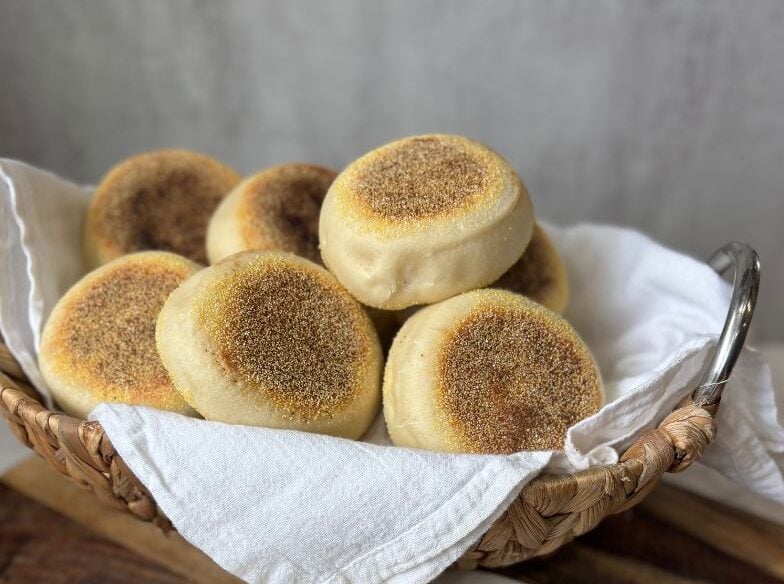
Protein Sourdough English Muffins
Being a former personal trainer turned sourdough blogger, I’m always looking for ways to balance the things I love with the goals I’m chasing. These Protein Sourdough English Muffins do exactly that. With 11 grams of protein per muffin, I can have my sourdough and hit my protein goals too.
These English muffins are soft, fluffy, long-fermented overnight, and full of protein. The best part is they’re made with real ingredients you can actually find at the grocery store. I wanted to skip the protein powder for this one and focus on whole-food sources that make sense.
Because the dough ferments overnight, you get that signature sourdough flavor along with all the benefits of fermented flour. The long fermentation gives the gluten time to break down, which can make it easier to digest and help your body absorb more of the nutrients and protein!
The protein comes from a mixture of egg whites and cottage cheese (stay with me here!).
Now, if you’re not a cottage cheese fan, I get it. Me either. I don’t think you could pay me to eat a bowl of it. But that should prove you don’t need to worry—you won’t taste it here. Blending it turns it into a smooth, milky mixture that adds moisture and protein without any curds. The result is a soft, protein English muffin that’s perfect for breakfast sandwiches, toasting, or a quick post-workout snack.
Disclosure: This post contains affiliate links. If you purchase something through them, I may earn a small commission at no extra cost to you. These links help fund the free sourdough recipes and tips I share with our sourdough community. Thank you for your support!
What You’ll Need
- Kitchen scale: Accuracy matters in baking, and weighing your ingredients is the best way to get consistent, perfect English muffins every time.
- Digital thermometer: Helps you check the internal temperature of your English muffins so you know they’re fully baked without overcooking.
- Heat gun thermometer: Makes it easy to confirm your cast iron skillet is at the right temperature before and during cooking.
- 12-inch cast iron skillet: Holds heat evenly and gives your English muffins that golden, crisp exterior.
- Mixing bowl: Great for combining ingredients or holding the dough during bulk fermentation.
- Stand mixer with dough hook: Saves your arms and helps develop gluten quickly for a soft, structured dough.
- Blender: Blends the cottage cheese, egg whites, and milk into a smooth, creamy mixture without any curds.
- Baking sheet: Perfect for proofing your shaped muffins before cooking.
- Parchment paper: Keeps your dough from sticking and makes cleanup a breeze.
- Spatula for flipping: Self-explanatory 😂
- Bench scraper: Makes it easy to divide and handle your dough without sticking or tearing.
Protein Sourdough English Muffin Ingredients
- 400 g unbleached bread flour: Recommend King Arthur (blue bag)
- 70 g liquid egg whites: I use egg whites from a carton, if you don’t have that, it’s about 2 eggs worth of egg whites
- 150 g cottage cheese: I use Knudsen brand 2%, keep in mind different cottage cheese brands will have different hydrations!
- 50 g milk: I’ve tried Whole milk and fat free- both worked great
- 100 g active sourdough starter: preferably fed at a 1:5:5 ratio. I have a how to video here!
- 20 g honey
- 35 g butter: melted or very soft
- 8 g salt: fine sea salt
- Cornmeal, for dusting
Method-
1. Before bed- Blend the wet ingredients
Add 150 g cottage cheese, 70 g egg whites, and 50 g milk to a blender and blend until smooth. This keeps the texture soft and ensures there are no chunks of cottage cheese in the dough.
2. Mix the dough
Pour the blended mixture into the bowl of a stand mixer fitted with a dough hook. Add 400 g unbleached bread flour, 100 g active sourdough starter, 20 g honey, 35 g melted butter, and 8 g salt.
Mix on medium-low speed for about 5 minutes, or until a smooth dough ball forms. Use speed 2 on a KitchenAid or speed 1 on a Bosch. The dough should feel slightly firm and pull away cleanly from the sides of the bowl. It shouldn’t be wet or sticky. Since different cottage cheese brands can vary in moisture, you may need to add flour a tablespoon at a time until the dough reaches the right consistency.
3. Bulk ferment overnight
Transfer the dough to a greased bowl, cover it, and let it bulk ferment on the counter overnight for about 8-10 hours.
My dough temperature was around 72°F, and it was perfect after 10 hours. If your dough is warmer, it may take less time. If it’s colder it may take longer.
4. Next morning- Divide and shape
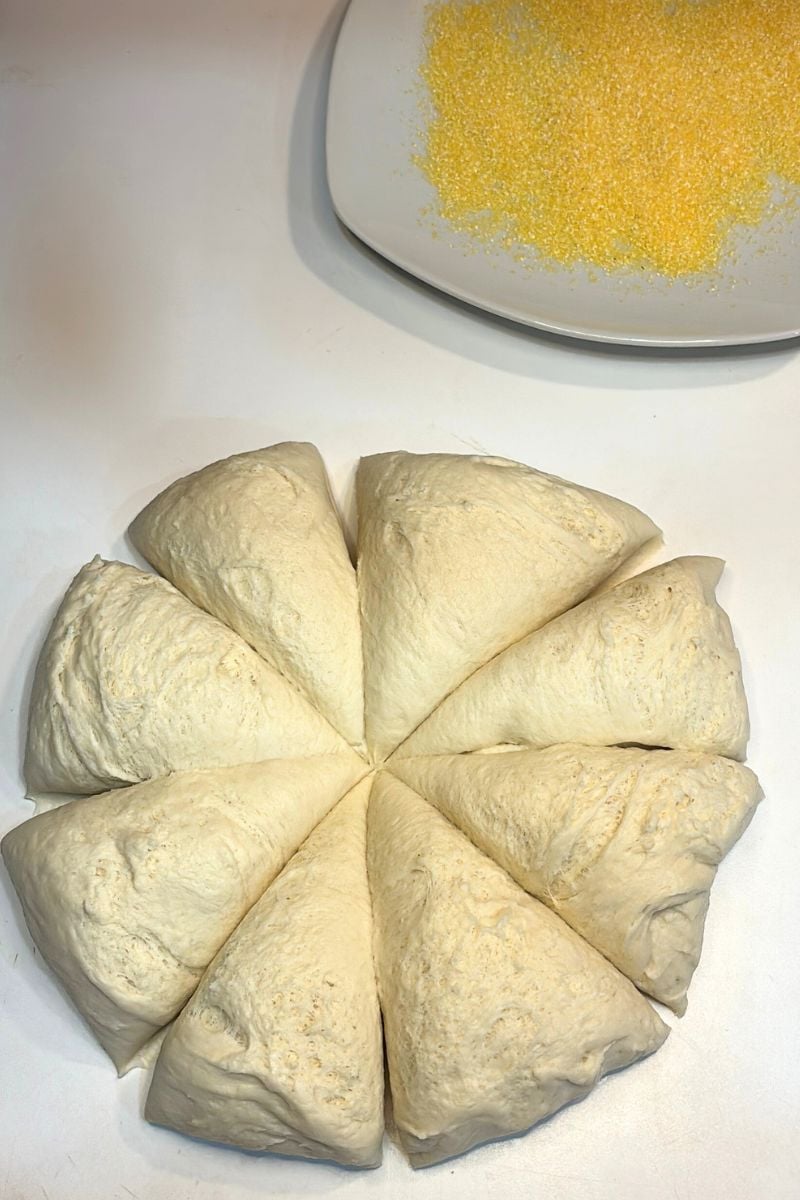
In the morning, gently turn the dough out onto your counter. Using a bench knife, divide it in half, then in fourths, then in eighths for a total of 8 muffins.
To shape:
Pull the edges of each piece of dough into the center, flip it seam-side down, cup your hand in a “C” shape, and gently roll it on the counter in a circular motion, getting tension on the ball of dough. Gently flatten it with your hands like the shape of a hockey puck.
Coat both sides in cornmeal, then place them seam side down on a parchment-lined baking sheet.
5. Proof
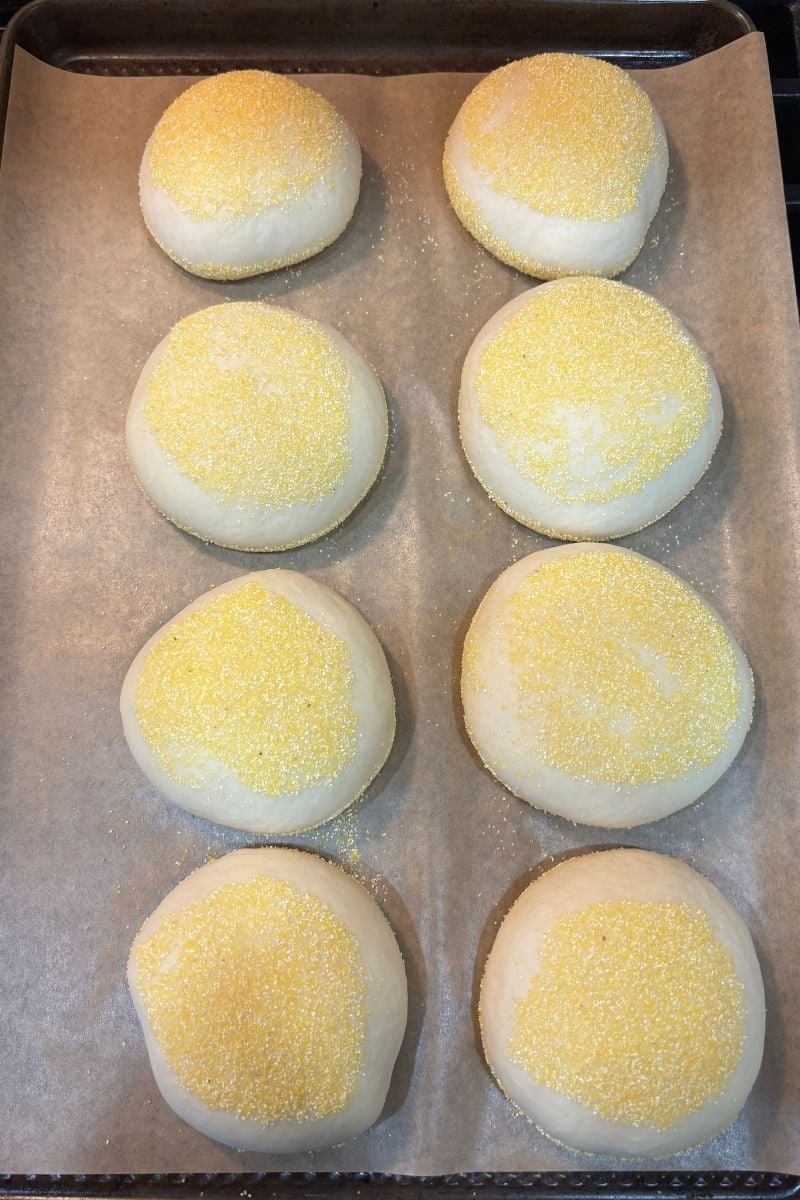
Cover and let them proof in a warm spot for about 2-3 hours or until they are noticeably puffy. I like to stick them in a proofing box or a warm oven (turned off) to speed it up a bit. Don’t skip this step. It’s what makes them nice and fluffy!
6. Cook
Preheat a 12-inch cast iron skillet to 350°F. Use your heat gun thermometer for accuracy.
Lightly oil the skillet and place 4 of the English muffins inside.
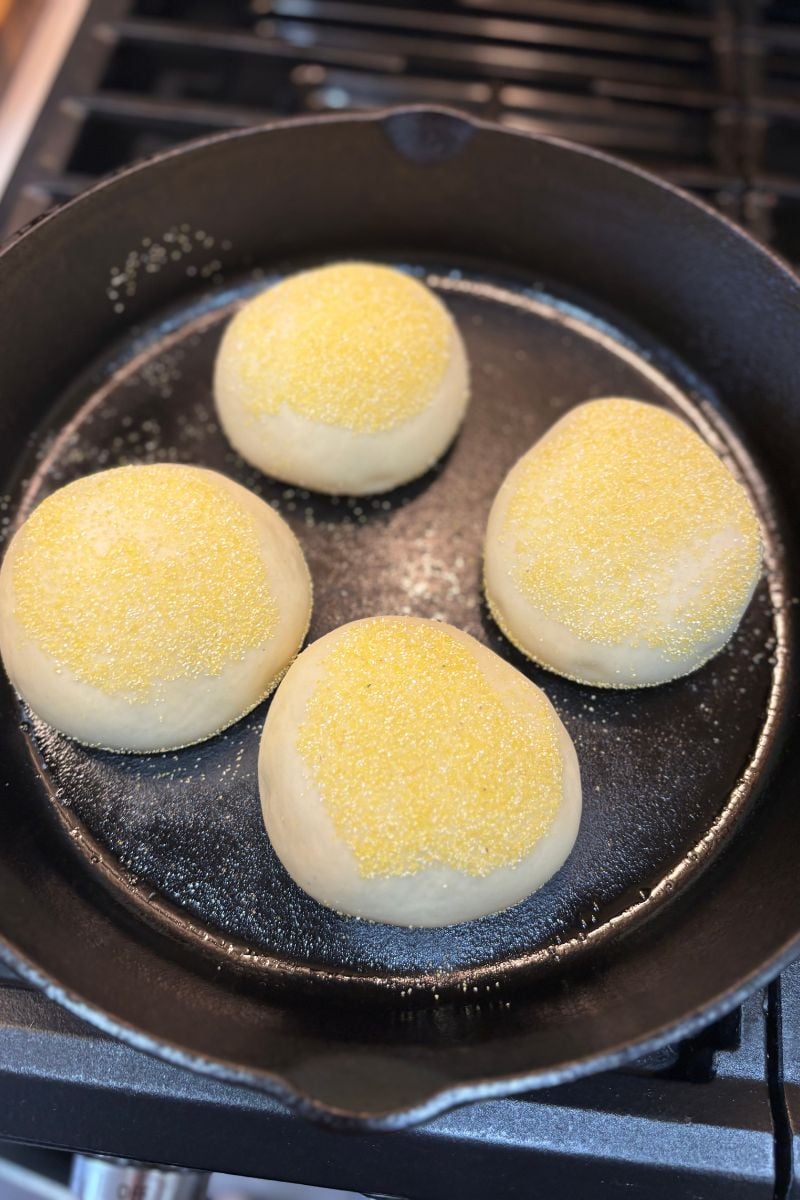
Cover with a lid and cook for 5 to 7 minutes per side, or until golden brown. When you flip them, gently press down on the tops with your spatula to flatten them slightly. Be careful not to press too hard, you don’t want to deflate them!
The trick is to go low and slow with the heat. If the heat is too high the outside will burn, and it will not be cooked on the inside. I constantly check my heat gun thermometer for temperature accuracy of the cast iron skillet.
The internal temperature of each muffin should reach 190 to 200°F.

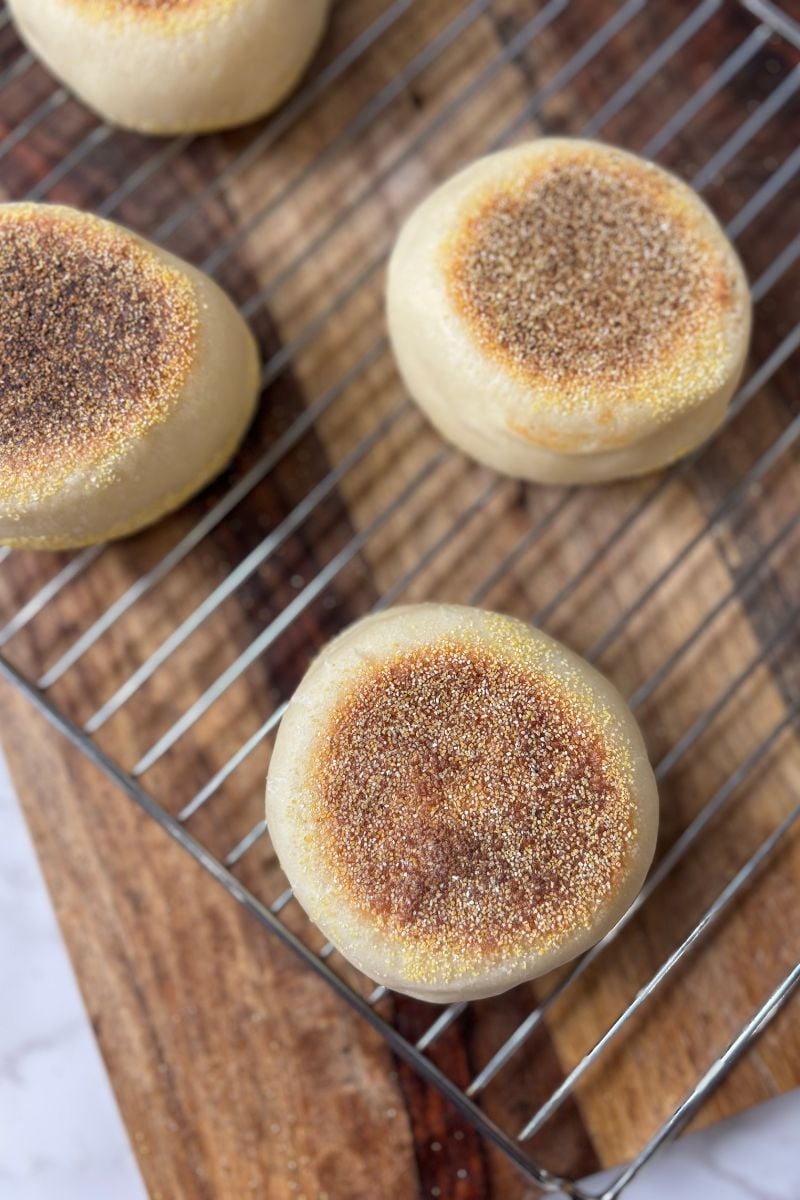
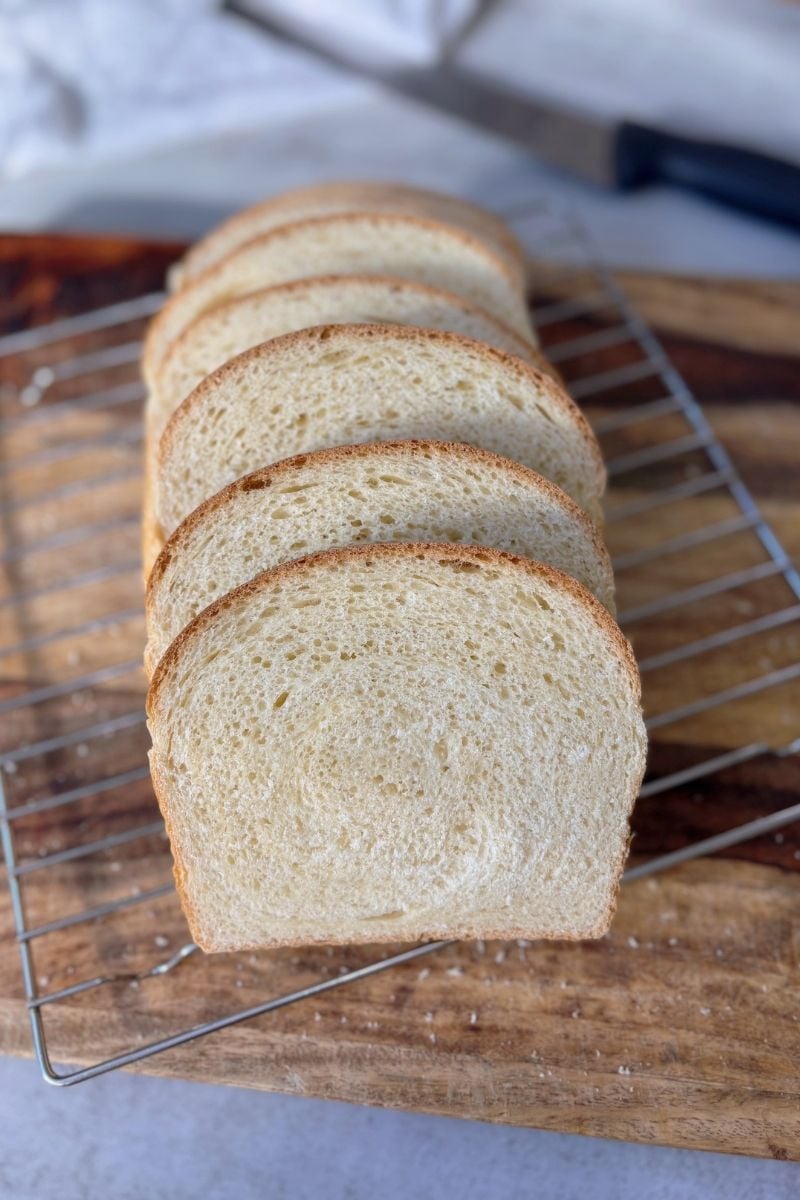
Transfer to a wire rack and allow to cool completely before slicing.
Tips for Success
- Blending the cottage cheese is key for a smooth texture.
- Check your skillet temperature before and during cooking. Too hot and they will burn before the centers cook through.
- Freeze extras by slicing them first and storing them in a zip-top bag. You can toast them straight from frozen.

Frequently Asked Questions
Can I use a different cottage cheese brand?
Yes! Any full-fat or low-fat cottage cheese should work. Just keep in mind that some brands hold more moisture than others, so you may need to add a tablespoon or two of extra flour to get the right dough texture.
What if I don’t have a stand mixer?
You can mix by hand. Use a dough whisk at first, then knead by hand for about 5 minutes until the dough feels smooth and elastic.
Do I have to ferment it overnight?
I recommend it, but you don’t have to! If you’re short on time, you can shorten the bulk ferment to about 4 to 6 hours in a warm spot, but you’ll miss out on some of the depth and benefits of a long ferment.
Can I make them smaller or larger?
Yes! This recipe makes 8 standard English muffins, but you can divide the dough into 10–12 smaller muffins or 6 larger ones. Just adjust the cook time slightly (smaller muffins will need a minute less per side).
How should I store these?
Room temperature:
Let your muffins cool completely, then store them in an airtight container or zip-top bag at room temperature for up to 2 days.
Freezer:
These freeze beautifully! Slice them first, then wrap individually or stack with parchment between each muffin. Store in a freezer bag for up to 3 months. You can toast them straight from frozen — no need to thaw first.
Protein Sourdough English Muffins (No Protein Powder)
Equipment
- Mixing Bowl
- Lint free kitchen towel
- Spatula for flipping
Ingredients
- 400 g unbleached bread flour
- 70 g liquid egg whites about 2 large eggs worth
- 150 g cottage cheese Knudsen 2 %
- 50 g milk
- 100 g active sourdough starter
- 20 g honey
- 35 g melted butter
- 8 g salt
- Cornmeal for dusting
Instructions
- Before bed – Blend the wet ingredientsAdd 150 g cottage cheese, 70 g egg whites, and 50 g milk to a blender. Blend until completely smooth with no curds remaining.
- Mix the doughPour the blended mixture into the bowl of a stand mixer fitted with a dough hook. Add 400 g flour, 100 g active starter, 20 g honey, 35 g melted butter, and 8 g salt.Mix on medium-low speed for about 5 minutes (speed 2 on KitchenAid or 1 on Bosch) until a smooth dough ball forms. The dough should be slightly firm and pull away from the bowl sides. Different cottage cheese brands have different hydrations. If your dough feels sticky, add flour one tablespoon at a time until it comes together.
- Bulk ferment overnightPlace the dough into a greased bowl, cover, and let it ferment on the counter for 8–10 hours.Ideal dough temperature is around 72 °F. Warmer dough will finish sooner; cooler dough will take longer.
- In the morning – Divide and shapeTurn the dough onto a lightly floured surface. Divide in half, then into fourths, then into eighths for 8 muffins.To shape: Pull the edges of the dough ball into the center, flip seam-side down on the counter, cup your hand in a “C” shape, and roll gently in a circular motion to build tension. Flatten slightly into hockey-puck shapes.Coat both sides with cornmeal and place seam-side down on a parchment-lined baking sheet.
- ProofCover with a lint free towel and let rise in a warm spot for about 2–3 hours.I like to stick them in a proofing box or a warm oven (turned off) to speed it up a bit. Don’t skip this step. It’s what makes them nice and fluffy!Fully proofed muffins will look puffy. If you poke it, it’ll slowly spring back and leave a bit of an indent in the dough. (See photo in blog post above)
- CookPreheat a 12-inch cast-iron skillet to 350 °F. Lightly oil the pan and cook 4 muffins at a time.Cover with a lid and cook 5–7 minutes per side. After you flip them, gently press down on the tops with your spatula to flatten them slightly. Be careful not to press too hard, you don’t want to deflate them!Keep the temperature steady; too hot will brown the outsides before the centers finish. Low and slow is the key to even cooking.Internal temperature of each muffin should reach 190–200 °F.
- CoolTransfer to a wire rack to cool completely before slicing.
Video

Nutrition
More Protein Sourdough Recipes
If you liked these, you might also enjoy:



23 responses to “Protein Sourdough English Muffins (No Protein Powder!)”
Would it work with 1% cottage cheese?
I haven’t tried with these, but I think it would!
12/10 these were probably the best English muffins I’ve made so far. Your tips to monitor the temp of the cast iron were incredibly helpful. They turned out perfect! Thanks for a great recipe!
Yay that makes my day, I’m so happy to hear it! I’m glad the cast iron tip helped. Thank you for taking the time to leave a review! 😊
Could the dough bulk ferment in the refrigerator vs on the counter?
I’ve bulk fermented it on the counter for a few hours and moved it into the fridge overnight and it does work but they weren’t as fluffy!
Great recipe. I made a couple of substations.I used egg white protein powder instead of egg whites. I used Greek yogurt in place of the cottage cheese. Olive oil instead of butter.
I made the dough and bulk fermented on counter during the day and cold proofed in fridge overnight.
They came out perfectly! Thanks for your recipe!
We really liked these and will definitely make them again! Recipe was pretty easy to follow. Slightly sweeter than I would like, so I will cut honey in half next time, but they taste exactly like an English Muffin from the grocery store, so this recipe is a perfect dupe!
can I make this into a loaf? if so what what is the oven temperaturemperature and other baking tips/
I would not recommend making this into a loaf, I imagine it would be quite dense and would need a higher hydration dough. I am currently working on a high protein sandwich bread, be on the lookout for it soon! 😊
What if I do not have a thermometer gun? How can I know the temperature of the cast iron?
You can make these without a thermometer gun. Just keep the heat low and slow and keep an eye on the bottoms as they cook. The thermometer gun isn’t an absolute need; it’s just a nice tool to have.
Hayley your recipes are so easy to follow and DELICIOUS!!
I love that you added protein recipes now and these English muffins are PERFECTION!!!!
The texture and taste are so satisfying and filling too, keep up the great ideas for added protein from foods!!!
Delicious! Thanks for the recipe!!
A big thank you to That Sourdough Gal for sharing your recipe. These are the sourdough English muffins I have been looking for! I initially had trouble with the dough being way too stiff, but I realized my scale wasn’t calibrated correctly. I made two with that dough and they were really hard, but my husband loved them! Once I fixed the scale issue, I corrected the water amount. They were perfect. I’m making them again tomorrow.
hi Hayley,
can I substitute (part of) the flour for whole wheat flour?
Hi! Whole wheat flour usually needs a bit more hydration and can come out dense depending on how much is used. I don’t think I would recommend it here, unless you’re up for an experiment! If you do try it, let me know how it goes! 😊
If I don’t have a stand mixer, would the mixing process be like making sourdough bread by hand?
You can mix by hand. Mix all ingredients together into a dough, then knead by hand for about 5 minutes. This will be a stiffer dough compared to a traditional sourdough loaf.
I would like to make these with discard and yeast for a quicker timeany recommendations?
Hi Carol, I haven’t tried that with these before, but I would think about 7g or 1 instant yeast packet would work for this. It will probably rise within 1-2 hours and be ready to shape and proof. Let me know how it goes!
what visual cues are we kooking for diring bulk fermentation? lwill the dough double in size after bulk fermentation?
Yes dough should double in size overnight