Cheddar and Onion Sourdough Bread Recipe
Back when I sold my sourdough, cheddar and onion was hands down my best-selling loaf. I’m actually shocked I haven’t put it on my blog sooner! The only reason is that it’s SO simple. If you can make a regular sourdough loaf, you can absolutely make this one. And it’s unbelievably delicious.
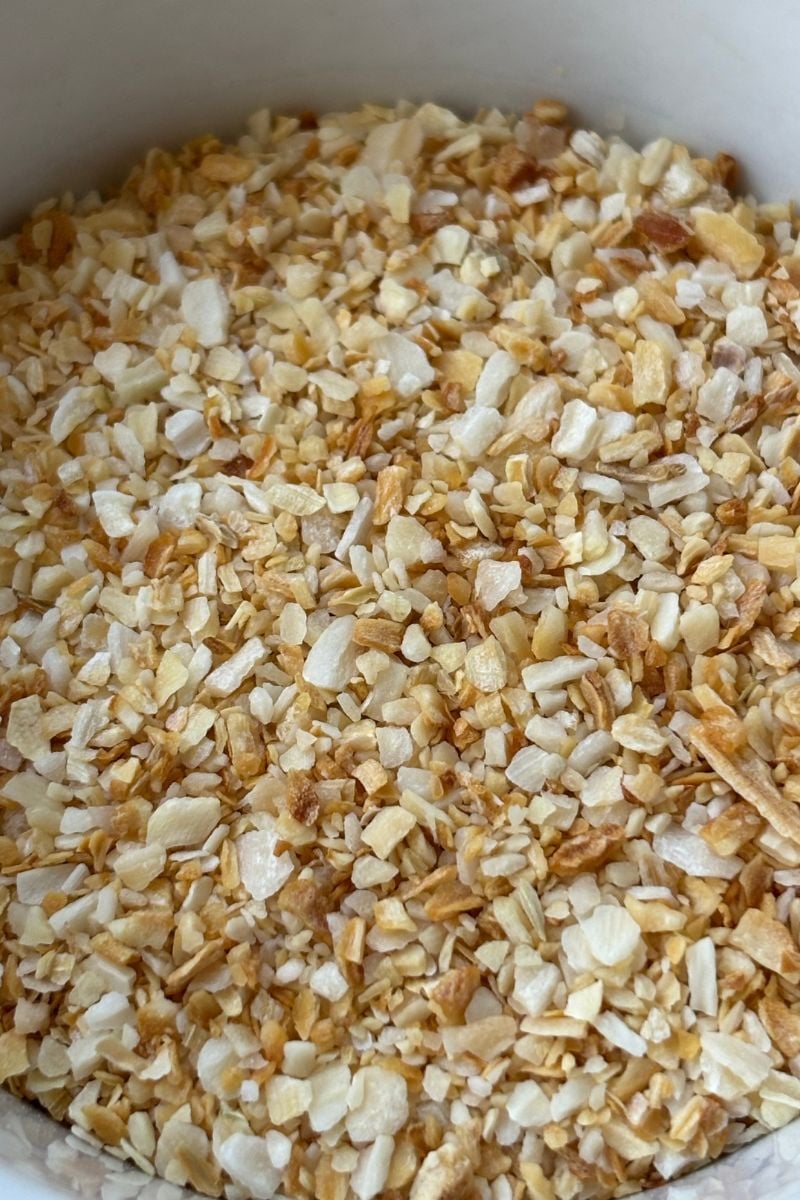
The cheddar melts into little pockets of rich cheesy flavor, and the dried minced onions rehydrate right in the dough, giving you that perfect onion flavor throughout without any extra moisture.
I love using dried minced onions because they’re easy to keep on hand and give consistent flavor without throwing off the hydration of the dough like raw onions can. This loaf has become a staple in our house, and I’m so happy to finally share it with you!
This post contains affiliate links, which means I may earn a small commission at no extra cost to you. I’m so thankful for your support, it funds the recipes and tips I share with our sourdough community!
Let’s Make a Cheddar and Onion Sourdough Loaf
Here is what you’ll need:
- 100g active sourdough starter
- 360g warm filtered water (80°F)
- 500g unbleached bread flour
- 10g salt
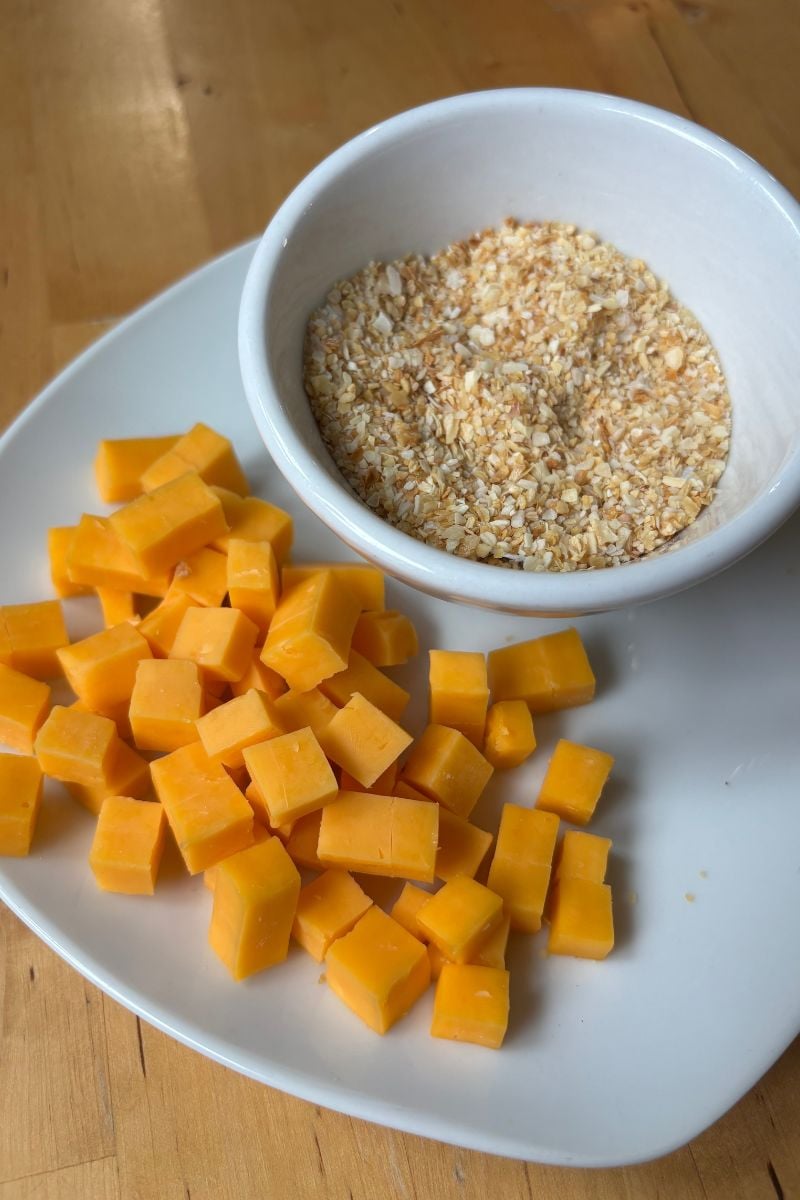
- 100g cheddar cheese (grated or cubed)
- 30g dried minced onions
Instructions
1. Mix the Base Dough
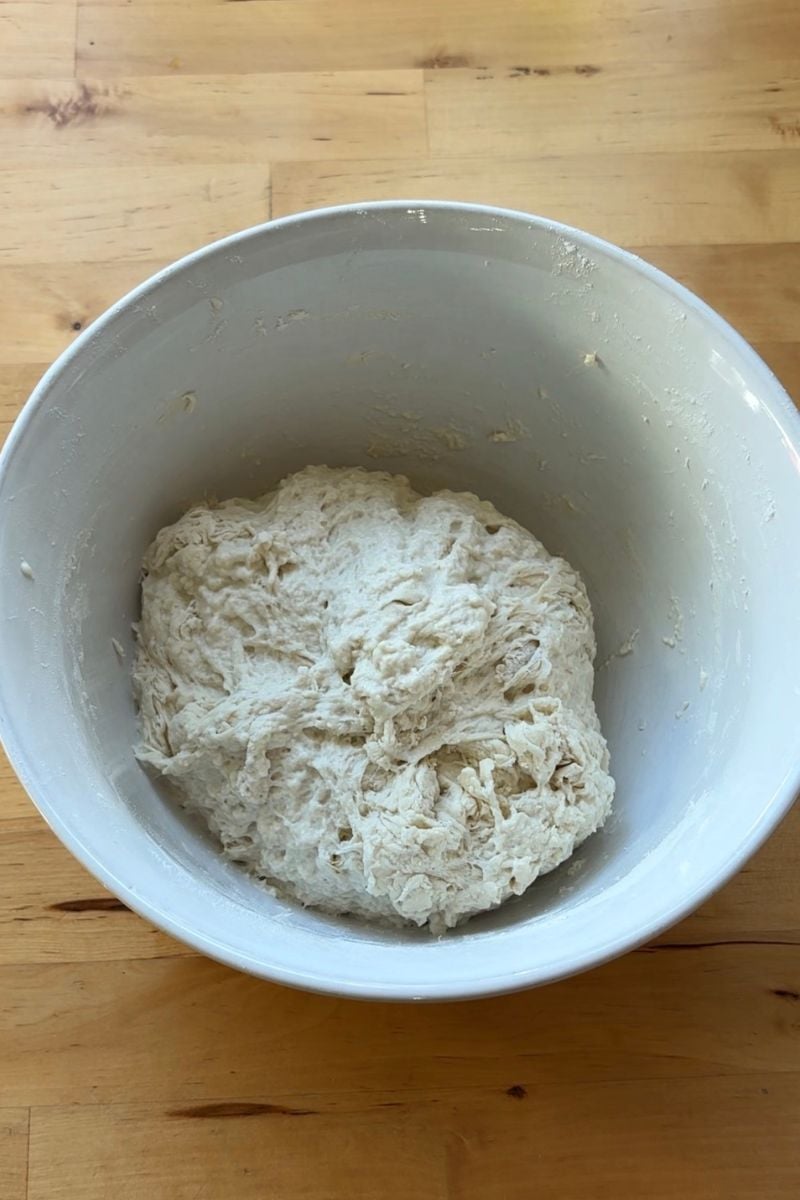
In a large mixing bowl, combine the 100g starter and 360g warm water. Using warm water about 80°F helps kick start yeast activity. Stir until you have a milky consistency. Add 500g bread flour and 10g salt and mix until a shaggy dough forms. Cover the bowl and let the dough rest for one hour. This rest gives the flour time to fully hydrate and helps build strength.
2. Stretch and Folds + Add Cheddar and Onions
After the hour rest, it’s time to start doing stretch and folds to develop gluten for a more structured loaf. Before adding the cheese and onions, perform one set of stretch and folds.
Round 1:
- With wet hands, grab one side of the dough, stretch it up, and fold it in the middle.
- Rotate the bowl a quarter turn and repeat on all four sides.
- Cover and let rest for 30 minutes.
Round 2:
- Add a portion of the cheese and onions over the dough, then stretch a side of the dough up and fold it over itself.
- Add more of the cheese and onions and repeat, continuing until everything is evenly layered throughout the dough.
- Gently tuck any exposed cheese and onions inside the dough to keep the outside of the dough clean and smooth.
Round 3 and 4:
Complete a total of 3 to 4 stretch and folds, spaced about 30 minutes apart. For the third and fourth rounds, you can switch to gentle coil folds (grabbing from the middle and pulling upwards) to strengthen the dough while keeping the inclusions tucked inside. It’s important to keep the inclusions tucked inside the dough so nothing burns while baking.
3. Bulk Fermentation
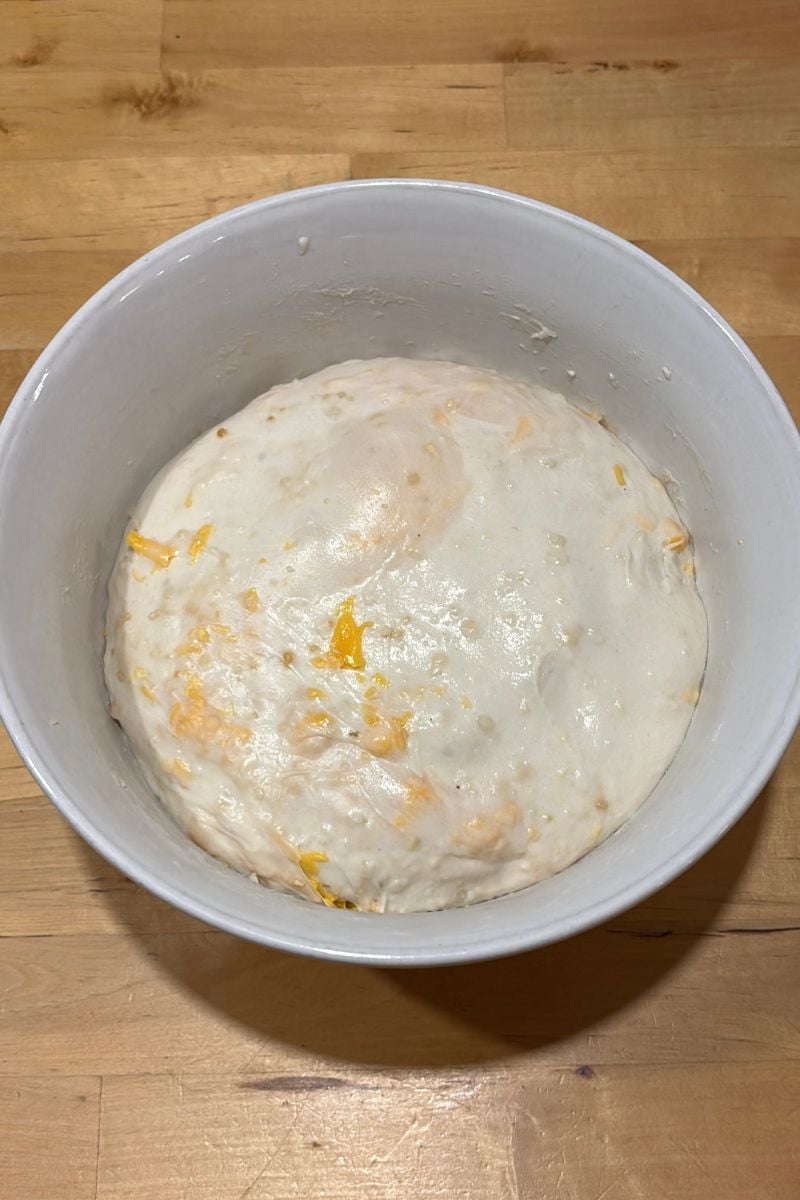
Let the dough ferment on the counter until it has roughly doubled in size, looks airy, and feels jiggly when you shake the bowl. How long bulk fermentation takes depends on your dough temperature.
I like to use this chart as a guideline, but I use the visual cues (mentioned above) to know when my dough is done. This may take some practice to get down if you’re new to baking sourdough.
| Dough Temp | Time |
|---|---|
| 80°F | 5 to 6 hours |
| 75°F | 7 to 8 hours |
| 70°F | 12 hours |
| 65°F | 16 hours |
Remember, the bulk fermentation time starts when you first mixed your dough in step 1.
Note: Dough temperature is different than your house temperature! I use a digital thermometer to temp my dough during bulk fermentation.
4. Shape and Cold Proof
Once the dough has finished bulk fermentation:
- Shape it into a round or oval (you can find my shaping video tutorial here) trying to keep all onions and cheese inside the dough as much as possible.
- Place it seam side up into a rice floured banneton basket
- Cover and refrigerate for 14 to 24 hours
This long cold proof rehydrates the onions, deepens the flavor, and makes scoring easier.
5. Bake Your Loaf
Preheat your oven to 450°F with a Dutch oven inside.
Take the dough out of the fridge, turn it onto parchment paper or a silicone sling, and score the top. Place it in the preheated Dutch oven.
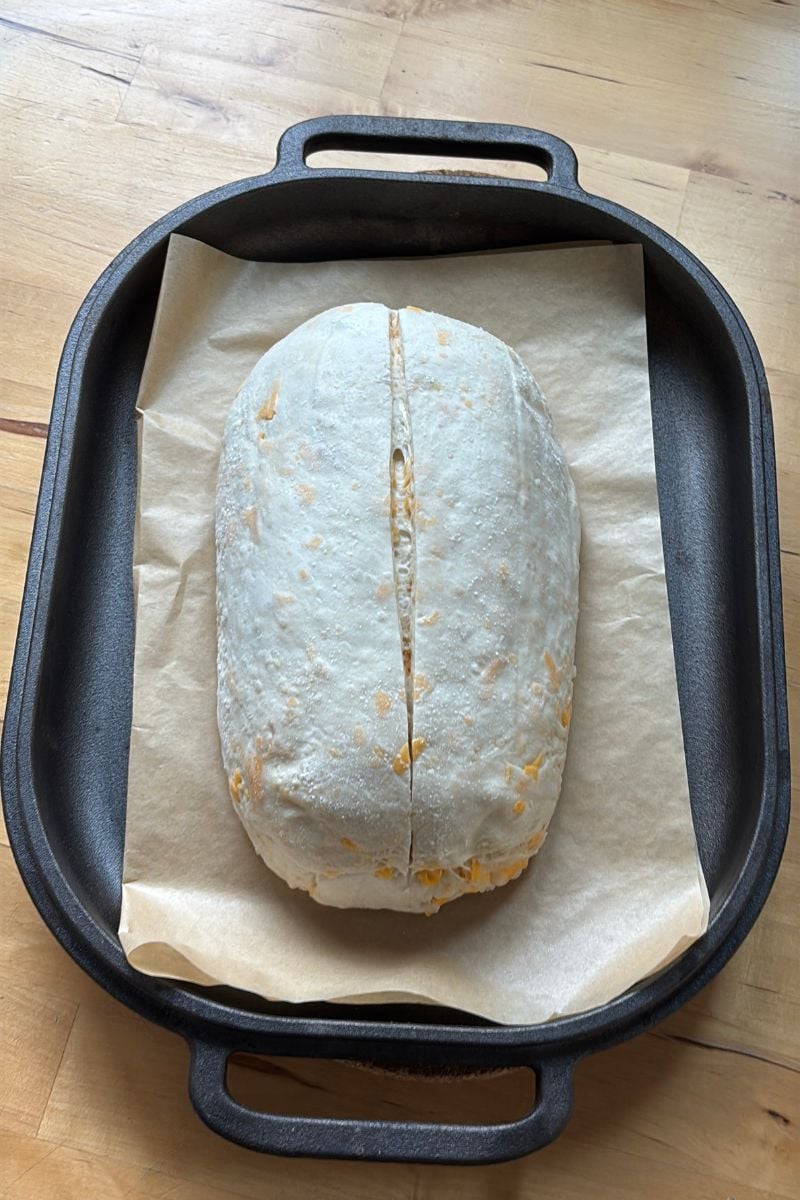
Bake:
- 30 minutes covered
- 15 minutes uncovered for a golden, cheesy crust
The bread is fully baked when the internal temperature reaches 205°F.
6. Cool and Enjoy
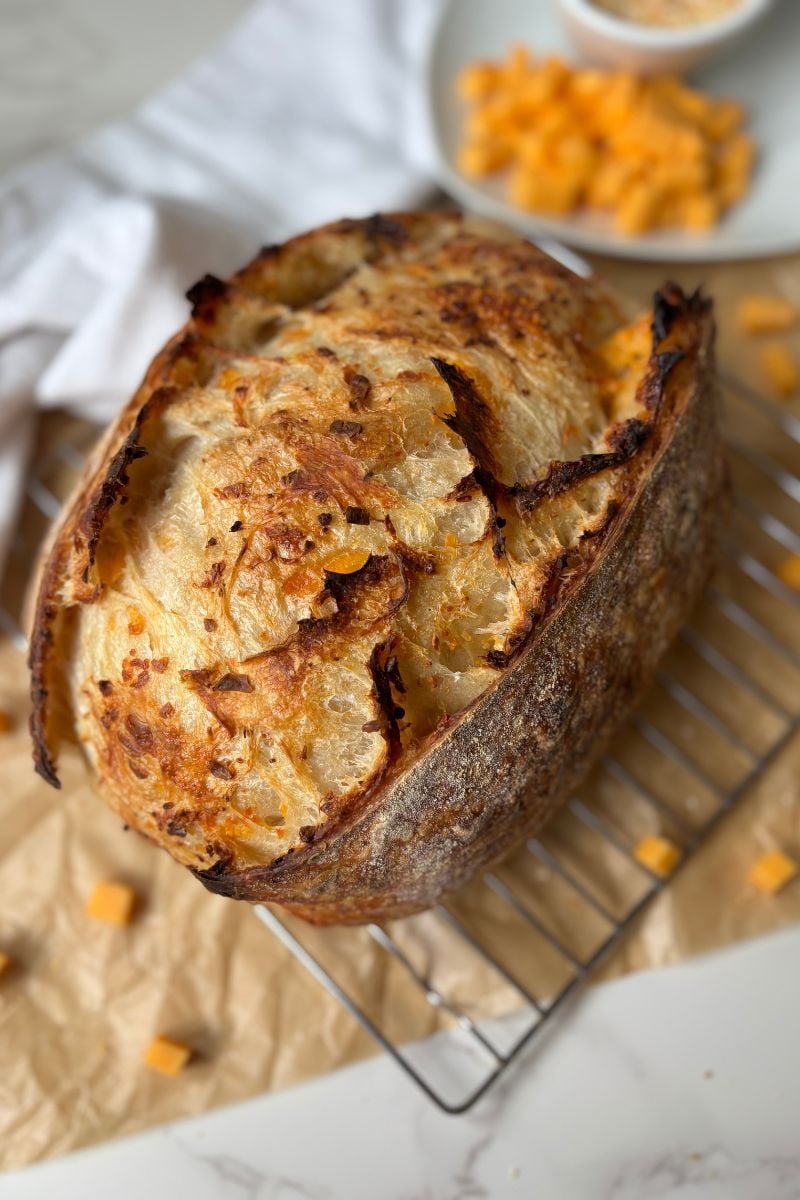
Let the bread cool on a wire rack before slicing so the crumb can set. Then slice, serve, and enjoy!
Frequently Asked Questions
Can I use fresh onions instead of dried minced onions?
I don’t recommend it. Fresh onions add extra moisture to the dough, which can throw off hydration and affect the crumb. Dried minced onions rehydrate in the dough and give even onion flavor without changing the dough structure.
What’s the difference between using shredded or cubed cheddar cheese?
Both work, but when and how you add the cheese matters. Shredded cheddar works best when added during stretch and folds. If you plan to add the cheese during shaping or lamination, finely diced or cubed cheddar is a better option since it helps prevent separation and large holes in the crumb.
Why are there big holes or separation in my loaf?
This usually happens when shredded cheese is layered during lamination or when inclusions are not tucked inside the dough. Keeping all cheese and onions inside the dough during folds helps prevent this. Also, make sure you bulk fermented and proofed your dough long enough. Big, tunneled holes are a sign of under fermenting.
How do I know when the bread is fully baked?
The loaf is fully baked when the internal temperature reaches 205°F and the crust is golden.
Can I bake this without a Dutch oven?
A Dutch oven gives the best oven spring and crust, but you can also bake on a preheated baking stone or steel with steam added to the oven. Baking in a loaf pan works as well. After proofing, turn the dough out of the banneton into the loaf pan, then cover with an inverted pan or tented foil for the first part of the bake.
How should I store this bread?
Let the loaf cool completely before storing. Keep it at room temperature in a plastic, paper bag, or fabric bread bag. It will stay fresh on the counter for about 2 days. If you do not plan to finish the loaf within a couple of days, freezing is the best option. Once fully cooled, slice the bread, place the slices in a freezer safe bag or container, and freeze. Pull out slices as needed.

Cheddar and Onion Sourdough Bread
Equipment
- 1 Medium or large mixing bowl
- 1 Cheese Grater or knife
- 1 sheet of parchment paper or silicon sling
- 1 Bread Lame or sharp knife
- 1 Thai Rice Flour (for dusting banneton)
Ingredients
Dough
- 100 g active sourdough starter
- 360 g warm filtered water 80°F
- 500 g unbleached bread flour
- 10 g salt
Inclusions
- 100 g cheddar cheese grated or cubed into small pieces
- 30 g dried minced onions
Instructions
- Mix the Dough: In a large mixing bowl, combine the 100g starter and 360g warm (80°F) water. Stir until you have a milky consistency. Add 500g bread flour and 10g salt, then mix until a shaggy dough forms. Cover and let it rest for 1 hour to allow the flour to hydrate.
- Stretch and Folds + Add Inclusions: After the 1 hour rest, begin stretch and folds to build gluten and structure.Round 1 (no inclusions):With wet hands, stretch one side of the dough up and fold it over the center.Rotate the bowl a quarter turn and repeat on all four sides.Cover and rest for 30 minutes.Round 2 (add cheese and onions):Sprinkle a portion of the cheese and onions over the dough.Stretch and fold, rotate the bowl a quarter turn, add more cheese and onions, and repeat on all four sides adding more as you go until evenly distributed.Tuck any exposed cheese and onions inside the dough so the top of the dough ball is clean.Cover and rest for 30 minutes.Rounds 3 and 4: Complete 1 to 2 more stretch and folds or gentle coil folds (grabbing from the middle and pulling upwards), resting 30 minutes between each. It's important to try and keep inclusions tucked inside to prevent burning while baking.
- Bulk Fermentation: Let the dough rest and bulk ferment on the counter until it has roughly doubled in size, looks airy, and feels jiggly. I like to use this chart as a guideline, but I use the visual cues (mentioned above) to know when my dough is done. This may take some practice to get down if you’re new to baking sourdough.Bulk fermentation time depends on your dough temperature and starts at the time you mixed your dough in step 1:Dough temp vs. Time80°F → 5 to 6 hours75°F → 7 to 8 hours70°F → 12 hours65°F → 16 hours
- Shape and Cold Proof:Once the dough has finished bulk fermentation:Shape it into a round or oval (see my shaping video link in blog for reference)Place it seam side up into a rice floured banneton basketCover and refrigerate overnight or about 14 to 24 hours for best results.
- Bake Your Loaf:Preheat your oven to 450°F with a Dutch oven inside.Turn your dough onto parchment paper or a silicone sling and score the top. Put dough in the preheated Dutch oven.Bake for 30 minutes covered, then uncover and bake for another 15 minutes until golden brown with a crispy crust.The bread is fully baked when the internal temperature reaches 205°F.
- Cool and Enjoy: Let the bread cool on a wire rack before slicing so the crumb can set. Then slice, serve, and enjoy!
Notes
I don’t recommend swapping the minced onion with raw, it will add too much hydration to the dough. -The cheese can be added during stretch and folds or during shaping or lamination. However, I do not recommend using shredded cheese during lamination, as it can create layers in the dough and cause separation and large holes in the crumb.
You Might Also Love
- Hot Honey, Cheddar and Jalapeño Soft Sandwich Bread: A sweet, spicy, and cheesy loaf that brings just the right kick.
- Soft Sourdough Sandwich Bread: Your go-to everyday loaf. It’s fluffy, light, and perfect for sandwiches or morning toast while still keeping that classic sourdough flavor.
- French Onion Sourdough Loaf: Everything you love about French onion soup baked into a loaf. Packed with caramelized onions, melted cheese, and deep savory flavor in every slice.


9 responses to “Cheddar and Onion Sourdough Bread Recipe”
After I do my stretch and folds you say u should leave on the counter overnight? Then in the morning shape and then put in fridge for 14 hrs? If I have a proofing box will that help speed things along and if so how long and what temp should I set it at? Also, normally I just do stretch & folds then leave on counter overnight then shape and bake in morning. Sorry this is so long but I’m confused
Hi Gina, I usually start my dough in the morning, so it stays on the counter during bulk fermentation. How long that takes depends on your dough temperature, I include a temp vs time chart in the recipe to help out!
Once bulk fermentation is finished, I shape the dough the same day and put it in the fridge to cold proof overnight. It can then be baked in the morning or anytime the next day, straight from the fridge.
If making the dough at night works better for you, you can absolutely mix, do stretch and folds, let it bulk ferment overnight on the counter, shape in the morning and move it to the fridge to proof, and then bake at night.
If you’re using a proofing box, setting it around 78°F can help speed things up and make timing more predictable during the day. I would keep the dough cooler for overnight bulk fermentation though.
Mild, medium or sharp cheddar? What’s your recommendation?
All will work, but I typically use sharp cheddar.
It looks amazing and I’m definitely going to make it, but I have one question: can I substitute bread flour with Trader Joe’s organic all purpose flour? That’s all I have on hand at this time .
Hi Lidia, You can use all-purpose flour, but I typically don’t recommend it for sourdough since it has a lower protein content and doesn’t give the loaf the same structure as bread flour. That said, if that’s what you have on hand, it will still work! Just know it may not be quite the same as if you used bread flour.
I made this 3 days ago and I am making
another to take to work. This is an OMG loaf! This is so good and I will always be making this. Thanks for another great recipe. Your instructions are perfect and easy to follow.
Perfect for toast and my husband loves this toasted for a roast beef sandwich. I made soup for the family and served as sliced with butter. Everyone raved about it!
Hi Jean, that’s seriously the best compliment. Thank you so much for trying the recipe, I’m so glad you guys love it!
This was delicious! Was wondering if it would be “too oniony” but it was perfect.
Thanks for posting!